

Spring Roof Leaks and Why They Shouldn't Be Ignored
Spring roof leaks rarely start in spring, even though that is when you first notice them. Water usually gets in after months of winter stress, where freezing and thawing slowly open up weak points across your roof. What looks like a small leak now can already be tied to deeper damage you cannot see yet.
If you ignore the early signs, water will keep moving through insulation, wood, and interior surfaces. Repairs get more expensive the longer moisture is allowed to spread and settle into your structure. Acting early gives you a much better shot at keeping the damage contained.
Are Spring Roof Leaks a Sign of Bigger Problems?
Spring roof leaks are often a sign that your roof already has underlying damage caused by winter conditions and trapped moisture. Freezing cycles can loosen materials and create openings that only start leaking once steady rain returns. Catching spring roof leaks early helps you deal with the source of the problem before it spreads further.
Why Roof Leaks Start Showing Up in Spring
Roof leaks tend to show up in spring because winter puts your roof through repeated stress that slowly weakens its structure. Snow sits for long periods, melts unevenly, and refreezes overnight, which creates pressure in places you cannot see. That constant cycle works its way into seams, edges, and small gaps that were not a problem before.
As temperatures rise, everything that was frozen starts to thaw, including trapped moisture under your shingles. Water that was sitting still during winter now begins to move, and it follows the easiest path into your home. Spring rain adds even more pressure, pushing water deeper into areas that were already compromised.
Ice dams also play a role in how these leaks form and spread across your roof. When water backs up behind frozen edges, it gets forced under shingles and into layers that are supposed to stay dry. Once that moisture is in place, it does not take much for it to start showing up as a leak inside.
By the time you notice a drip or stain, the problem has usually been developing for weeks or even months. Spring does not create the damage, it exposes what winter already started. That is why leaks can seem sudden, even though they have been building quietly over time.
What Spring Roof Leaks Really Mean for Your Roof
Spring roof leaks are not just surface issues; they usually point to damage that has already moved beyond the outer layer of your roof. Water getting inside means something has failed, whether it is shingles, flashing, or the underlying structure. What you see inside your home is often only a small part of the full problem.
Once moisture gets past the top layer, it starts affecting insulation, wood decking, and even framing if left alone long enough. These materials do not dry quickly, especially when temperatures are still shifting in early spring. That allows moisture to sit and spread, which weakens your roof from the inside out.
Leaks can also travel, which makes them harder to track and easier to underestimate. Water can enter in one spot and show up somewhere completely different inside your home. That movement is what makes spring roof leaks tricky, because the visible damage does not always match where the issue started.
When you see a leak, it usually means your roof has already lost part of its ability to protect your home. Ignoring it does not keep it contained; it gives it more time to spread into areas that cost more to repair. Understanding what a leak really means helps you take it seriously before it turns into a larger structural problem.
When Spring Roof Leaks Mean You Need Immediate Repair
Some spring roof leaks give you time; others do not. The difference shows up in how quickly water appears and how often it comes back. A quick roof inspection can determine if you need professional repair.
If water shows up the moment it starts raining, your roof already has a direct opening that is not closing on its own. These leaks no longer depend on heavy storms or unusual conditions; they occur every time because the damage is already in place. That kind of consistency means you are no longer dealing with early wear, you are dealing with a failure point. Ignoring it even for a short time allows water to keep moving deeper into your home.
You should also watch how the leak behaves over time, not just how it looks at first. A stain that keeps growing, spreads outward, or returns after drying tells you the problem is active. Once that pattern starts, waiting only gives it more space to expand.
What Happens If You Ignore Roof Leaks
A roof leak does not stay where it starts, it moves through your home as water finds new paths. It can travel across beams, insulation, and surfaces before you ever see the full extent of the damage. What looks small on the surface often connects to a much larger affected area.
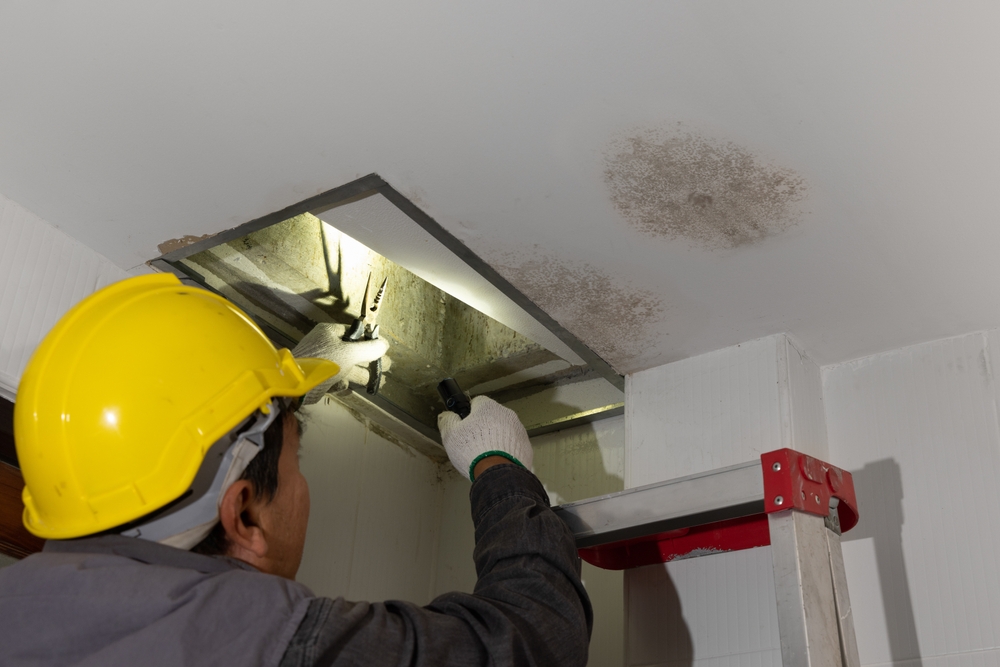
As moisture builds up, materials inside your roof begin to break down. Wood softens, fasteners loosen, and layers that should stay solid start losing strength.
Over time, the damage spreads beyond the roof itself and starts affecting other parts of your home. Insulation loses its effectiveness, ceilings begin to stain, and surfaces can warp or weaken. These changes do not happen all at once, but they continue to develop as long as moisture is present.
The longer the leak is ignored, the more areas it reaches and the harder it becomes to control. What could have been a simple repair turns into multiple problems that all need attention.
Ignoring a leak is not neutral, it actively makes the situation worse. Water keeps moving, materials keep weakening, and repair costs keep rising as the damage spreads.
Stop Spring Roof Leaks Early
Spring roof leaks are not random problems; they are warning signs that your roof has already been under stress and may be starting to fail. Everything you have seen, from how leaks form to where they show up and how they spread, points to damage that does not stay contained. Acting early gives you a chance to fix the source before it affects more of your home.
You do not need to wait for the leak to get worse to take it seriously, especially when water is already finding its way inside. Taking action now helps you avoid more costly repairs and keeps the problem from spreading further. Talk to us at Hoskins Exteriors to get a clear look at what is going on, or contact us today to schedule an inspection and protect your home before the next storm hits.
